
Dedicated computer vision engineers for your offshore team.
Offshore computer vision engineers in Chiang Mai and Bangkok, working full time on your product and managed by us. A computer vision engineer builds systems that work from images and video: detection, classification and segmentation, fast enough to be useful.
We employ, manage and keep training the engineers we assign, and you pay one fixed monthly fee.

This role is part of a dedicated AI engineering team. It's staff augmentation, fully managed: take one role on its own, or the whole area as one delivery team.
One Computer Vision Engineer, assigned to your product and fully managed.
We assign a Computer Vision Engineer to your team full time and run everything around them: a service delivery manager who oversees delivery, training and coaching, the office and equipment, and HR and payroll. The price below is for a junior Computer Vision Engineer; other levels are priced in your proposal, and how the monthly fee is built explains the arithmetic.
From price
One junior Computer Vision Engineer, full time, everything below included. All 27 things included ››
- Computer vision engineer From USD 3,100 per month
-
Service
We manage and develop the team
- A service delivery manager who oversees operations and delivery
- A 1:1 with our Head of Delivery every two weeks
- Weekly delivery scoring and monthly capacity reports
- A Talent Success Manager for every team member
-
HR
We are the employer
- Recruitment and technical assessment
- Employment contracts
- Salary and payroll
- Tax and social security
-
Facilitation
We provide the workplace
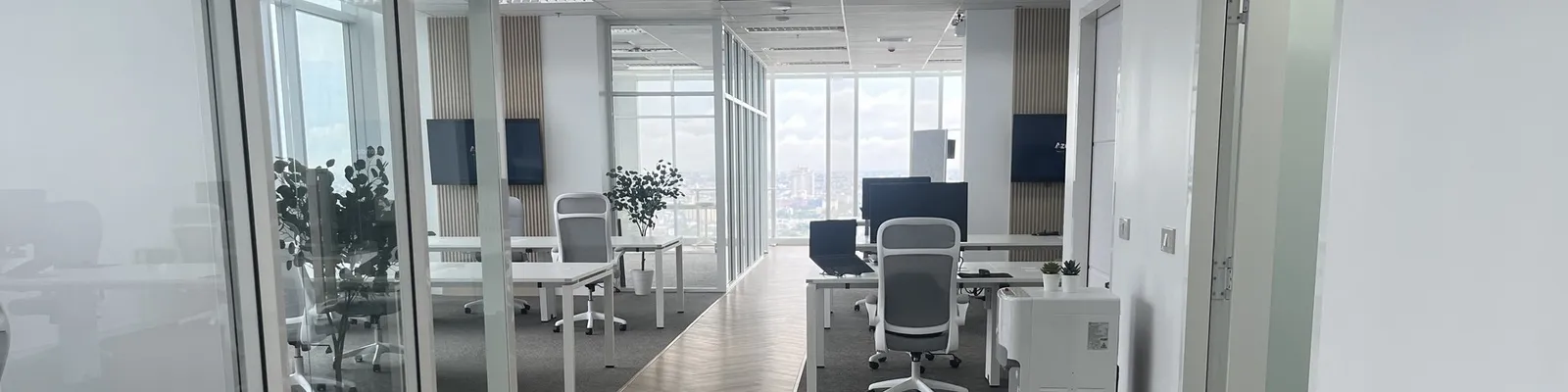
- A desk in our office in Chiang Mai or Bangkok
- A Workplace Experience Manager on site
- Team events through the year
- IT support
-
Equipment
We supply the tools
- Laptop and hardware
- Software licences
- LinkedIn Learning access
- Device security and management
What a Computer Vision Engineer does on a dedicated AI engineering team.
They work with your product team and whoever captures or labels your images. From the first week they plan for the hardware the model will run on.
Computer Vision Engineer skills and technologies
-
Object detection, classification and segmentation models trained on your own data.
-
Image and video pipelines, including preprocessing and annotation workflow.
-
Inference optimisation for edge or real-time deployment where latency is the constraint.
-
Managing dataset versioning so a model can be traced back to the exact data it was trained on.
-
Handling the edge cases that break vision systems in production, such as lighting, occlusion and unusual angles.
Computer Vision Engineer seniority levels.
Junior to lead. Turning a working notebook into a deployable vision system takes real experience, so production work often calls for a senior. Earlier, exploratory work can start at a lower level. Whichever you need, it goes into how the monthly fee is built.
When your team needs a Computer Vision Engineer.
A specialist role for products with a physical or document-processing side. The vision engineer sits next to an AI or LLM engineer in a dedicated AI team. It is the role companies add when they hire a dedicated development team for image or video features that have to run fast.
What we look for in a dedicated Computer Vision Engineer.
We look for vision engineers who have taken a model from notebook to deployment. They should know their data pipeline as well as their architecture, version datasets, and plan for bad lighting and unusual angles.
A remote Computer Vision Engineer's first three months on your team.
- Weeks 1 to 2Reviewing your images, labels and deployment target, and setting up dataset versioning.
- Weeks 3 to 6Training first models and measuring them on real-world samples.
- Months 2 to 3Optimising inference for your hardware and hardening the model against edge cases.
Questions about adding a Computer Vision Engineer to your team.
Do we need labelled training data?
Usually some, though often less than people expect. Our engineer can set up an annotation workflow, use a pre-trained model where it gets close enough, or generate synthetic data for rare cases. The first step is checking how far existing models get on your images before anything is labelled.
Can models run on edge devices?
Yes, with quantisation, pruning and optimised runtimes for the target hardware. Latency, power use and accuracy have to be balanced, and the engineer measures all three on the real device. Running at the edge keeps images on site and works without a network, which matters in many industrial settings.
Add remote computer vision engineers to your team.
Tell us what the camera sees, how many labelled images you have and where the model has to run. We'll suggest the level of vision engineer for it and send one fixed monthly fee.
Tell us what your computer vision engineer would work on.
Loading the form…
We reply within one business day.

