
1. Buying people when the gap is management
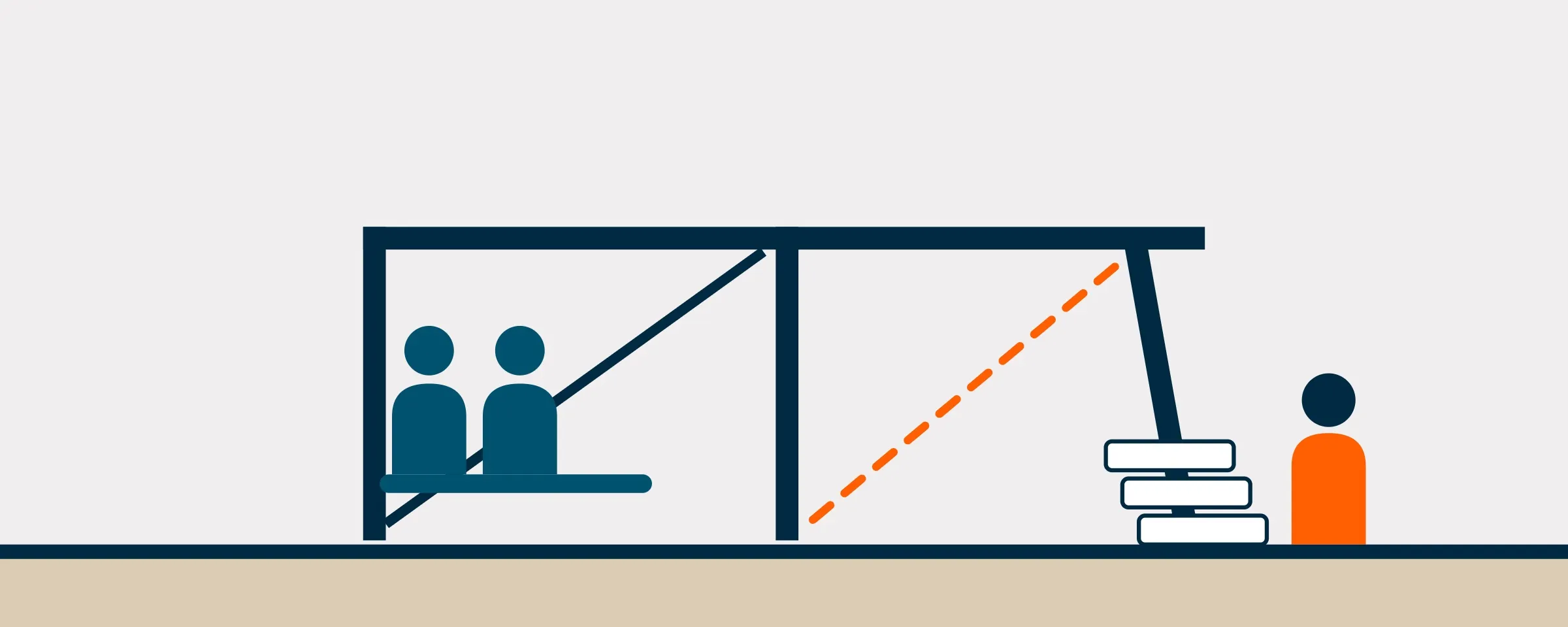
The most common mistake by far. A company that can’t ship fast enough adds engineers to a team that has no spare management capacity, and adds a coordination problem to the delivery problem. Someone now has to plan the new people’s work, review their code, answer their questions and run their one-to-ones, and that someone was already busy.
Warning sign: your leads’ own output drops in the first quarter after the new people arrive.
How to avoid it: decide before you sign who will manage the new people day to day, and how many hours a week they can give it. If your leads have no hours to spare, choose a managed team. There the provider manages the people day to day and is accountable for the service.
2. Treating the first month as fully productive
Every new team needs a ramp-up. Developers have to learn your codebase, your architecture, your release process and the reasons behind decisions that were never written down. A plan that assumes full speed from day one is late before the team starts.
Warning sign: the first sprint goals are missed and everyone is surprised.
How to avoid it: plan for it openly. Give the first sprints small, well-defined tickets in one area of the product, time to read the code before changing it, and a named person to ask. A structured ramp-up turns the first month into a normal onboarding curve.
3. No agreed definition of done
A distributed team that hasn’t seen your standards will invent its own. One person’s done means merged, another’s means tested, a third’s means in production with monitoring.
Warning sign: reviews turn into arguments about what was expected, and the same feedback repeats every sprint.
How to avoid it: write the standards down before work starts: coding conventions, test coverage, review rules, documentation and how a ticket moves to production. Then everyone measures the work the same way from the first sprint.
4. Routing everything through one person
When all communication runs through one person on your side, delivery pauses whenever they’re away, busy or ill. That person becomes the bottleneck for every question, every decision and every review.
Warning sign: the remote team’s work slows whenever your contact is in meetings or on holiday.
How to avoid it: spread the contact points. Let engineers talk to engineers, and give the product owner direct access to the team. On the provider’s side, ask for one named person who can pick up a problem and escalate it without waiting.
5. Leaving status reporting to chance
Problems in offshore software development teams are rarely hidden on purpose. They just travel slowly. A blocker that would be obvious across a desk can sit unnoticed across a time zone for a week.
Warning sign: status updates that only ever say fine, until suddenly they don’t.
How to avoid it: build structured reporting into the process from the start. At Azendo every client gets a delivery survey every week, a report every month and a 1:1 with our Head of Delivery every two weeks. A named service delivery manager takes what comes out of them and plans the improvements with our Talent Success team. Good news and bad news then travel at the same speed.
6. Choosing on the lowest rate
The cheapest arrangement usually has the highest turnover, and every departure costs weeks of re-onboarding for the next person. A low rate with high churn costs more than a fair rate with people who stay.
Warning sign: new faces on the team every few months, and the same questions asked again.
How to avoid it: compare retention as well as rates. Ask every provider for the average tenure of its engineers and how it’s calculated. Ours is 3.3 years.
What the six mistakes have in common
Every one of them is structural, which means each can be designed out before the team starts. That’s also why changing vendor without changing the structure usually produces the same result with different names.
The first mistake is really a choice of model, covered in full in staff augmentation vs managed services. A dedicated offshore software team that comes fully managed helps with the other five as well. You get a planned ramp-up, a definition of done agreed at the start, direct contact with every engineer, feedback collected every week and people who stay. How we set up a team to avoid all six is explained in how it works. Companies that want to hire remote developers this way start with a dedicated development team.

